 Skip to content
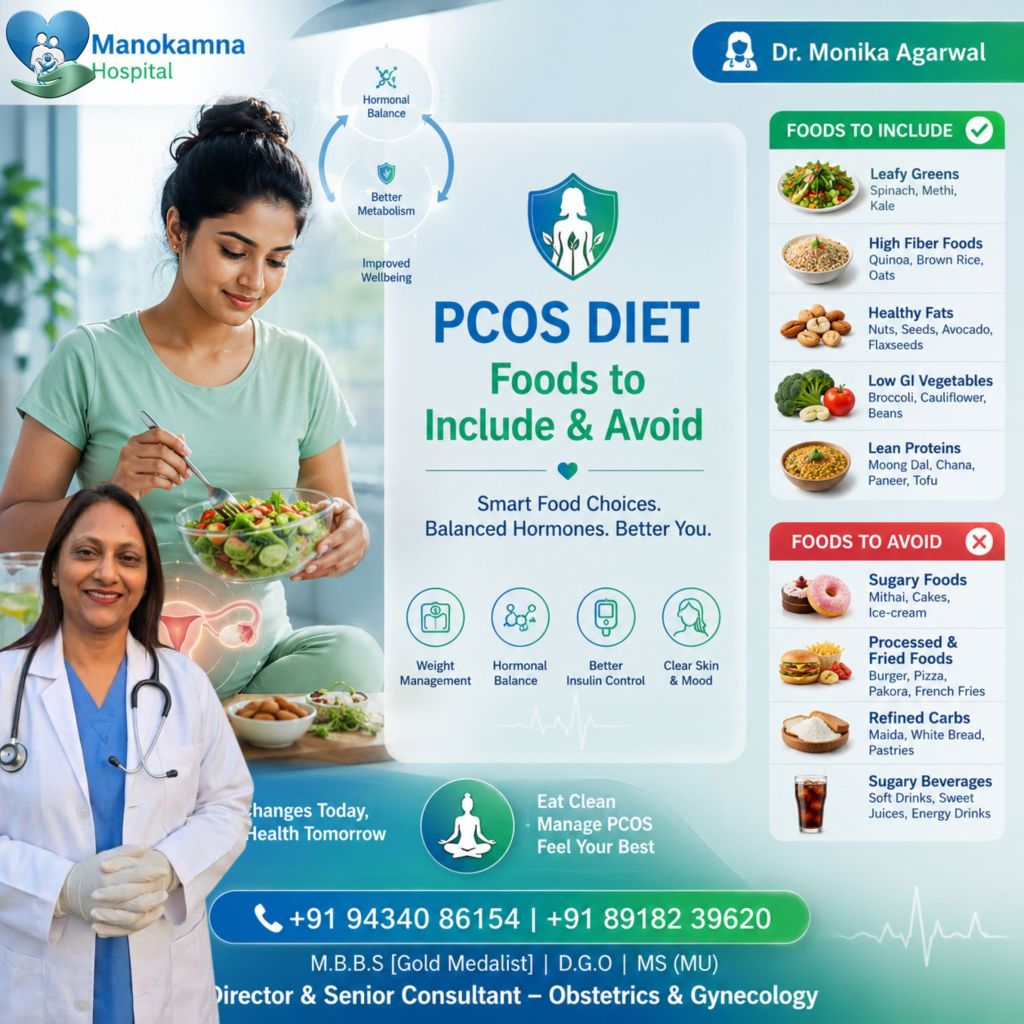
PCOS Diet Foods to Include and Avoid: Polycystic Ovary Syndrome, commonly known as PCOS, is one of the most common hormonal conditions affecting women today. Many women with PCOS experience irregular periods, weight gain, acne, excessive hair growth, difficulty in conceiving, and mood changes. While medical treatment is important, maintaining the right diet can play a major role in managing PCOS symptoms naturally.

As a gynecologist, I often meet women who feel frustrated because they are unsure about what foods are helpful and which foods may worsen their condition. The good news is that simple dietary changes and healthy lifestyle habits can significantly improve hormonal balance and overall health.

A healthy PCOS diet focuses on balanced nutrition, stable blood sugar levels, and maintaining a healthy weight. The goal is not strict dieting, but creating sustainable eating habits that support long-term women’s health.
For high-quality Diabetics care in Siliguri, including expert consultation in diabetes management and obstetrics services, visit Monokamna Hospital. Powered By Argusdna
Why Patients Seek Medical Consultation, PCOS Diet Foods to Include and Avoid
Many women seek medical advice when they notice irregular menstrual cycles, sudden weight gain, acne, hair thinning, or difficulty becoming pregnant. Some women also experience fatigue, mood swings, or darkening of the skin around the neck and underarms.
PCOS is closely linked to insulin resistance, which means the body has difficulty using insulin properly. This can increase the risk of weight gain, diabetes, and hormonal imbalance if left untreated.
Women often feel confused because symptoms vary from person to person. Some may have severe menstrual irregularities, while others mainly struggle with weight management or fertility concerns. Consulting an experienced gynecologist helps in proper diagnosis and personalized treatment planning.
Read More:
Understanding Diagnosis & Treatment Approach
PCOS is usually diagnosed through a combination of medical history, physical examination, blood tests, and ultrasound scans. Doctors evaluate hormone levels, menstrual patterns, and ovarian health to confirm the condition.
Diet plays an important role in managing PCOS because food directly affects insulin and hormone levels. A balanced PCOS diet can help improve menstrual regularity, support weight management, and reduce inflammation in the body.
Foods rich in fiber and protein are especially beneficial. Fiber slows down digestion and helps control blood sugar levels, while protein helps maintain energy and reduces unhealthy cravings.
Women with PCOS should include whole grains, oats, brown rice, lentils, sprouts, eggs, fish, paneer, nuts, and seeds in their daily meals. Fresh fruits and vegetables also provide essential vitamins, antioxidants, and fiber that support hormonal health.
Healthy fats such as almonds, walnuts, flaxseeds, and olive oil can also be helpful. These foods support hormone production and may reduce inflammation associated with PCOS.
At the same time, certain foods can worsen symptoms. Sugary drinks, sweets, packaged snacks, white bread, refined flour products, and highly processed foods may cause sudden spikes in blood sugar and insulin levels.
Excessive fast food, fried items, and soft drinks may contribute to weight gain and hormonal imbalance. Limiting these foods can help improve overall PCOS management.
Tips for Better Women’s Health & PCOS Management
Women with PCOS should focus on regular meal timings and avoid skipping meals. Long gaps between meals can increase cravings and affect blood sugar balance.
Eating smaller, balanced meals throughout the day may help improve energy levels and reduce overeating. Combining protein with healthy carbohydrates can also keep blood sugar stable.
Regular physical activity is another important part of PCOS management. Walking, yoga, cycling, or light exercise for at least 30 minutes most days can support weight control and improve hormonal balance.

Good sleep and stress management are equally important. Poor sleep and high stress levels can worsen hormonal imbalance and menstrual irregularities.
Drinking enough water and reducing sugary beverages can also improve overall health. Simple lifestyle changes often make a noticeable difference when followed consistently.
Common Questions Patients Ask
Which foods are best for PCOS?
Foods rich in fiber, protein, and healthy fats are beneficial for PCOS. Whole grains, vegetables, fruits, lentils, eggs, nuts, and seeds are healthy choices.
Can diet alone cure PCOS?
PCOS usually requires long-term management. A healthy diet and lifestyle can significantly improve symptoms, but some women may also need medical treatment.
Is weight loss important in PCOS?
Even small amounts of healthy weight loss may help improve hormone balance, menstrual cycles, and fertility in women with PCOS.
Should women with PCOS avoid sugar completely?
It is best to limit excessive sugar and processed foods. Natural sugars from fruits in moderate amounts are generally healthier options.
Can PCOS affect fertility?
Yes, PCOS can affect ovulation and make conception more difficult for some women. However, proper treatment and lifestyle management can improve fertility outcomes.
How Dr. Monika Agarwal Supports You
Dr. Monika Agarwal provides compassionate and personalized care for women dealing with PCOS, hormonal imbalance, irregular periods, infertility concerns, and overall women’s health issues.
She focuses on identifying the root cause of symptoms and guiding patients with individualized treatment plans that include medical management, dietary advice, lifestyle counseling, and fertility support when needed.
Her goal is to help women feel healthier, more confident, and better informed about managing PCOS and long-term reproductive health.
Conclusion
Managing PCOS becomes easier when women understand the importance of healthy eating and balanced lifestyle habits. Choosing the right foods can improve hormone balance, support healthy weight management, and reduce many common PCOS symptoms.
Every woman’s body is different, and personalized medical guidance is important for effective PCOS management. Early diagnosis and consistent care can help prevent long-term complications and improve quality of life.
Book your consultation with Dr. Monika Agarwal today for expert and compassionate women’s care.
Appointments: +91 89183 33029 | +91 70296 75484
Website: Dr. Monika Agarwal Official Website
